Climate Activism Has an Enormous, Corrupt, Unacknowledged, Harmful Tobacco Science Problem - As Wide as the Sky, As Large as the Entire Electric Grid
“If we’re really going to address the major risk factors of disease, we have to address how sustainability proponents are causing disease.”

On Feb.19, 2025, Inside Climate News, (“Pulitzer Prize-winning, nonpartisan reporting on the biggest crisis facing our planet”) published the article, Lethal Greed: How Corporate Manipulation of Science and Regulation Makes People Sick, Scientists launch a new research center to study what they say is now a leading disease risk factor: corporations. The article was written by journalist Liza Gross.
Founded in 2007, Inside Climate News is the oldest and largest dedicated climate newsroom in the nation. We are nonprofit and non-partisan and exist to publish essential reporting, investigation, and analysis about the biggest crisis facing our planet. We watchdog government, industry and advocates and hold them accountable for their policies and actions. We counter misinformation, hold polluters responsible, expose environmental injustice and scrutinize solutions. We have earned many of the most prestigious awards in journalism, including the Pulitzer Prize. Our newsroom maintains a focus on environmental injustice, consistently examining how climate change disproportionately burdens communities of color and vulnerable populations. Through our fellowship program, we also provide hands-on newsroom experience for emerging reporters wanting to specialize in climate, environment and justice reporting. We rely wholly on grants from philanthropies and donations from individuals to pay for operations. We are a 501(c)3 public charity and make our work available without a paywall to ensure that anyone can read it, wherever they are. We also provide our stories to media partners for free to sustain the practice of environmental journalism, support local newsrooms and improve public understanding of science, health and the environment in communities across the nation, through ICN Local.
‘Center to End Corporate Harm’ University of California, San Francisco
Liza Gross’s article covers the launch of the new Center to End Corporate Harm at the University of California, San Francisco.
She writes, “Chronic diseases like cancer, heart disease and metabolic disorders have overtaken infectious diseases like tuberculosis and cholera. It’s not genetics, age or lack of exercise driving the rapid rise in chronic disease, scientists at a new research center say. This shift, which has dramatically changed in the last 20 years, is due to corporate-produced risk factors,” said Tracey Woodruff, an expert on the health impacts of environmental exposures and director of the new Center [].
“One in four deaths globally is due to exposures to chemicals, plastics and fossil fuels,” Woodruff said at a celebration of the center’s launch last week in San Francisco, adding that ultra-processed foods, opioids and tobacco are other “corporate-driven risk factors contributing to disease.”
The new center will foster collaborations among scientists who study industry tactics to hide the harms of their products, taking advantage of UC San Francisco’s Industry Documents Library. The library, started to provide permanent access to millions of internal tobacco industry materials released through litigation, now curates collections of documents across the opioid, drug, chemical, food and fossil fuel industries.
“We’ll be using science and the industry documents to hold industry accountable,” Woodruff said. The goal, she said, is to study what she calls the leading vector of disease: corporations.
Inside Climate News asked the American Petroleum Institute, the American Chemistry Council and the National Association of Tobacco Outlets for their perspectives on the new center, but none of the industry trade groups responded.
[] in 1994, a whistleblower dropped off more than 4,000 pages of confidential internal tobacco industry documents from the Brown & Williamson Tobacco Corp. in the office of UC San Francisco researcher Stanton Glantz. About a decade later, the researchers obtained another collection of previously secret documents, this time from an off-label marketing lawsuit against the drug industry. “These documents basically told us what was really happening,” said Bero, a leading authority on corporate bias and conflicts of interest in research. Researchers could now analyze memos, letters, emails and other materials written by company executives, scientists, lawyers and PR firms. They unearthed elaborate industry campaigns to fund research that supported their products, suppress research that didn’t, discredit researchers who questioned their products’ safety and even influence how science should be evaluated. It was extremely difficult to convince policymakers and regulators of these tactics, Bero said, until researchers could show them what industry players were doing, in their own words.
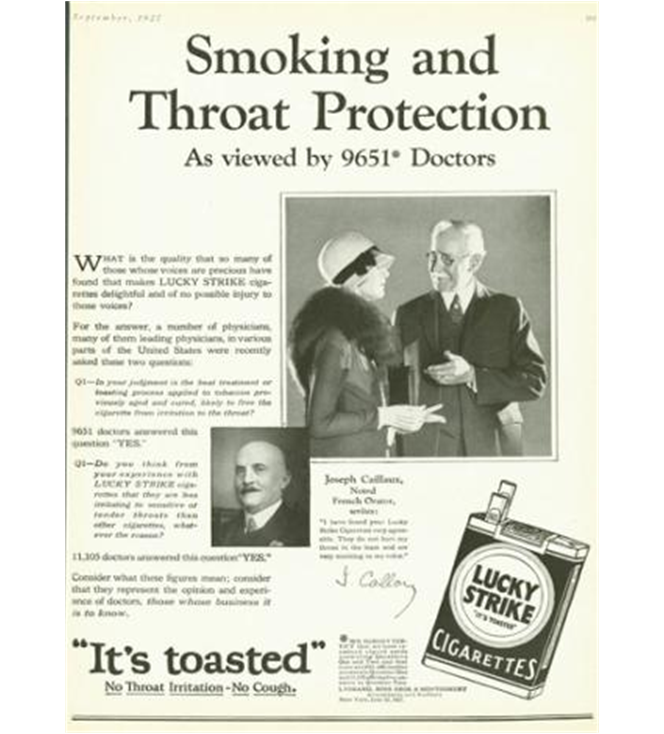
Scholars have the longest history of documenting these tactics from studying the tobacco industry. “They basically cut their teeth on denying that tobacco causes disease,” said Pam Ling, a physician and public health expert who leads the UC San Francisco Center for Tobacco Control Research and Education.”
[] Around the same time the obesity epidemic took off, the tobacco industry acquired the largest food companies in the world, Schmidt said. They showed their food subsidiaries how to take chemical additives and use them in ultra-processed foods to make them more addictive and unhealthy, she said.
[] The documents have also revealed how companies influence the regulatory process. Some of the influence is easy to see and track, like lobbying. Ultimately, the center aims to help people and policymakers see corporations as risk factors. “If we’re really going to address the major risk factors of disease,” Woodruff said, “we have to address how corporations are causing disease.” - Lethal Greed: How Corporate Manipulation of Science and Regulation Makes People Sick - Inside Climate News
The Center’s Industry Documents: Tobacco, Opioids, Chemicals, Drugs, Food, Fossil Fuels

Industry Documents Library “A portal to millions of documents created by industries that influence public health, hosted by the UCSF Library.”
The Climate-Concerned Community Pointed Fingers at Tobacco Industry Tactics by Fossil Fuel Companies
David Michaels
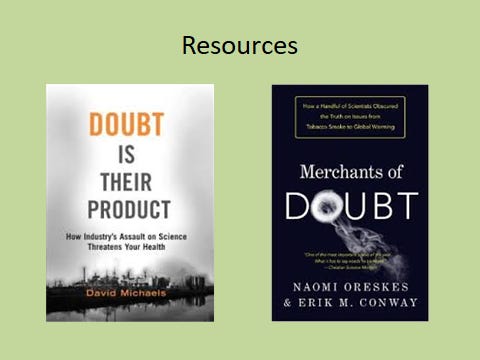
In 2008, David Michaels published his book, Doubt Is Their Product, How Industry’s Assault on Science Threatens Your Health. “Doubt is Their Product documents how the tobacco industry’s tactics spawned a multimillion dollar industry that is dismantling public health safeguards in areas far from tobacco. Product defense consultant [ ] , have increasingly skewed the scientific literature, manufactured and magnified scientific uncertainty, and influenced policy decisions to the advantage of polluters and the manufacturers of dangerous products. To keep the public confused about the hazards posed by climate change, second-hand smoke, asbestos, lead, plastics, and many other toxic materials, industry executives have hired unscrupulous scientists and lobbyists to dispute scientific evidence about health risks. In doing so, they have not only delayed action on specific hazards, but they have constructed barriers to make it harder for lawmakers, government agencies, and courts to respond to future threats.”
In February of 2009, David Case of Fast Company published Manufacturing Doubt in Product Defense What is the product-defense industry? How does it work, and who’s behind it? We asked David Michaels, author of the exposé Doubt Is Their Product.
FC: What exactly do product-defense companies do? They combine science with public relations to help clients avoid regulation and litigation. I have yet to see a study published by a product-defense firm that conflicts with the needs of the study’s sponsors. The intent is to cast doubt on real science. The industry has deep roots in the fight over tobacco.
Who are the major players? Some of the big ones are Exponent, Gradient, ChemRisk, and the Weinberg Group. There are many small ones. Any scientist can hang out a shingle and hope to attract the interests of a polluter. There are a lot of academics who do this work.
Naomi Oreskes and Erik M. Conway
In 2010, Naomi Oreskes and Erik M. Conway published their book Merchants of Doubt: How a Handful of Scientists Obscured the Truth on Issues from Tobacco Smoke to Global Warming. “Science” noted, “[] Opposition to scientifically well-supported claims about the dangers of cigarette smoking, the difficulties of the Strategic Defense Initiative (‘Star Wars’), the effects of acid rain, the existence of the ozone hole, the problems caused by secondhand smoke, and-ultimately the existence of anthropomorphic climate change was used in ‘the service of political goals and commercial interests’ to obstruct the transmission to the American public of important information.’”
Then, Sustainability/Clean Energy Interests Partnered with Industry, Regulators, and Politicians and Utilized Tobacco Scientists to Suppress Evidence of Harm Caused by Smart Utility Meters
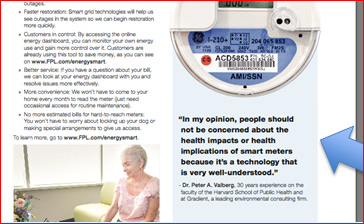
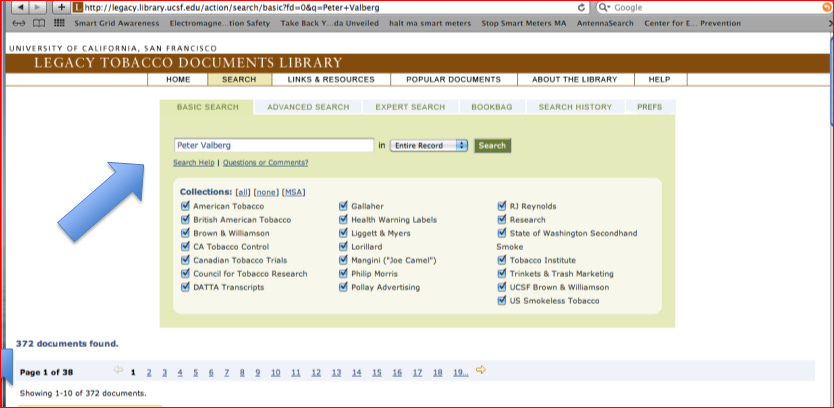
The fact that Pete Valberg of Gradient is a tobacco scientist is well-documented. An earlier search of the previous Legacy Tobacco Documents Library yielded 372 links.
In February of 2014, Valberg testified on behalf of Philip Morris cigarettes in Ohio, the same week that he testified on behalf of the Massachusetts Department of Public Utilites to dismiss smart meter health concerns.
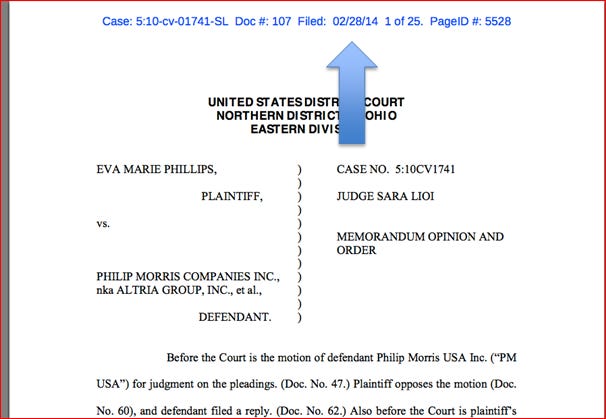
https://truthinadvertising.org/wp-content/uploads/2014/05/Phillips-v.-Philip-Morris-order-denying-class-cert-.pdf
The public record indicates clearly that Valberg’s testimony misrepresenting smart meter safety was utilized and/or referenced in many other states and jurisdictions, with environmental groups, politicians, utility regulatory commissions, and utilities ignoring complaints raised by the public about the corruption of the science. This includes the NCSL National Conference of State Legislatures.
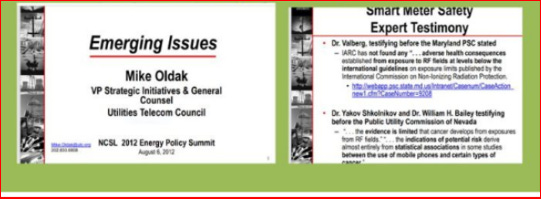
This is Not Product “Defense,” It is Offense, Associated with Access to an Essential Service - Electricity
Although tobacco scientists eventually came to be known as “Product Defense” experts for their work in the courts defending companies in liability lawsuits, in the case of justifying the roll-out of smart meters across the country, the “science” was pro-actively weaponized against the public.
This was not an issue of consumers deciding whether or not to smoke or buy junk food, - the meters are associated with access to essential services.
The question is not how many U.S. states and jurisdictions were impacted by Valberg’s advocacy, The question is - did any regulatory agency or environmental group gave credence at anything other than corrupted science? (Some states including Nevada tapped another notorious product defense firm, Exponent.)
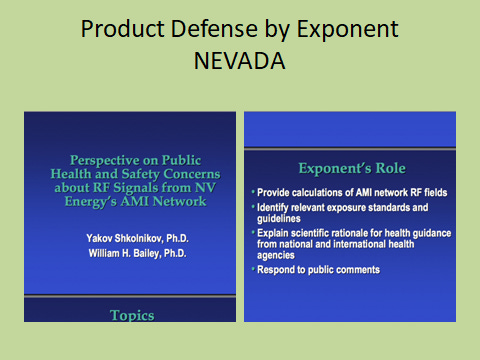
Tobacco Science for the Utilities-Telecom Industries and Smart Meters Did Not Stop at Corporations
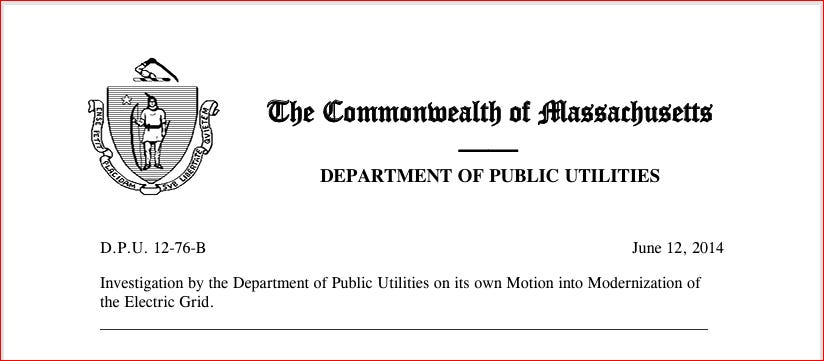
https://fileservice.eea.comacloud.net/FileService.Api/file/FileRoom/9235208
As an example, the MA DPU ‘s order 12-76-B included the erroneous claim that FCC guidelines are protective of both thermal and non-thermal effects of exposures to non-ionizing radiation.
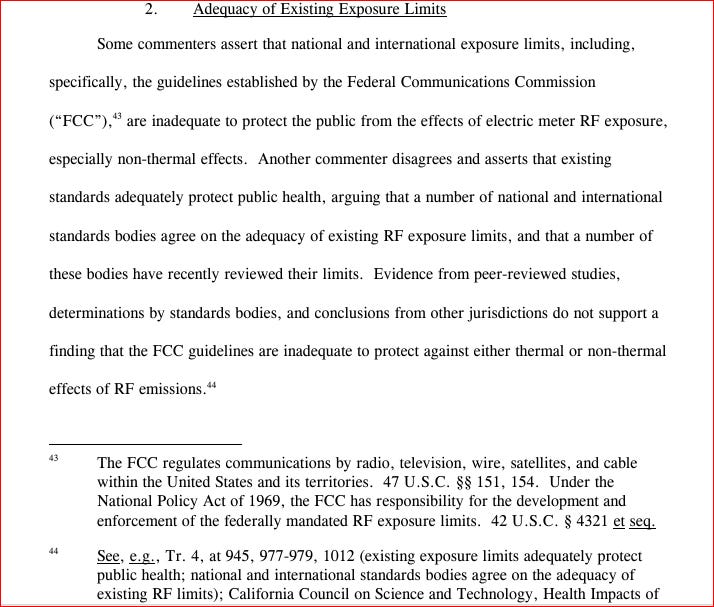
https://fileservice.eea.comacloud.net/FileService.Api/file/FileRoom/9235208
See also the email exchange where the DPU solicits tobacco scientist Peter Valberg's testimony, (obtained via a FOIA Freedom of Information Act request.)
The entire DPU order represents a case study in a collaboration between the utility regulator and a tobacco scientist.
Does the state’s utility regulator publication of such a grossly inaccurate statement regarding the scope of exposure guidelines meet the definition of malfeasance?
Testifying in another state, Valberg contradicted himself regarding non-thermal effects.
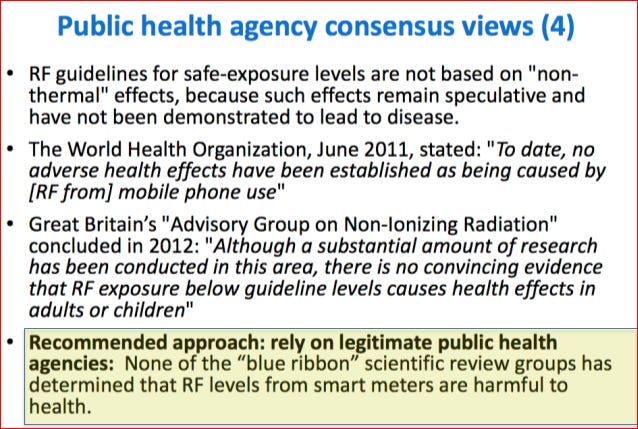
Safety advocates across the country attempted to reach out to many sustainability, environmental, and clean energy groups seeking support and calling for integrity, and the evolution of the science regarding the non-thermal effects of non-ionizing radiation, in many cases, after experiencing and/or witnessing profound health harm, to no avail.
At the federal level, the FCC has ignored the 2021 court remand calling for the agency to justify why it has not reviewed its 1996 exposure guidelines, despite reported harm.
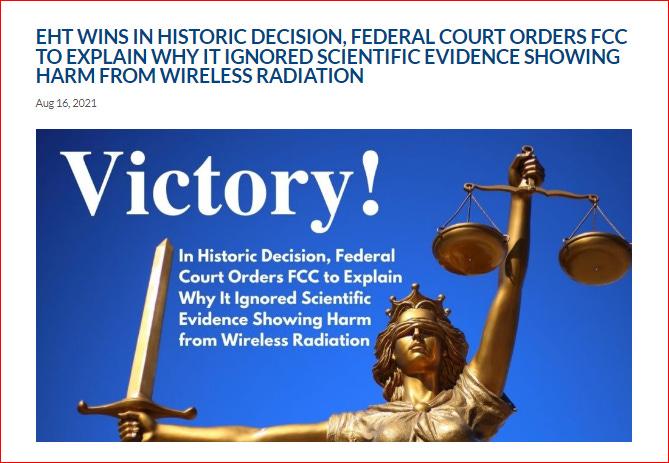
EHT Wins in Historic Decision, Federal Court Orders FCC to Explain Why It Ignored Scientific Evidence Showing Harm from Wireless Radiation - Environmental Health Trust
Will the Rubber Now Meet the Road?
"Where the rubber meets the road" is a metaphorical phrase that signifies the point at which an abstract concept is put into action or tested in real life. The phrase is a metaphor for the point of contact between a vehicle's tires and the road, where the theoretical potential of the vehicle is translated into actual motion. It often points out the crucial stage where the efficacy of a plan, strategy, or theory is truly tested. It implies the transition from mere talk or planning to taking concrete action. The idiom is typically used in informal or colloquial contexts, but it can also be used in business and professional environments to discuss the implementation of strategies, policies, or ideas. - Source
Somewhere, within the ranks of those who believe that they are engaged in the effort to “address the biggest crisis facing our planet,” a reckoning must take place, because advocates hyper- focused on carbon have become perpetrators.
The core values of many who identify as environmentalists have been co-opted and are enabling profound destruction, and not just via smart meters.
See Katie Singer’s thoughtful coverage of a proposed battery energy storage system (BESS), endorsed by the Siera Club and 350.org, (both of whom have ignored the smart meter health harm ‘inconvenient truth’.)
AES CORPORATION’S PROPOSED SOLAR & BESS FACILITY IN SANTA FE COUNTY, NM: AES proposes installing a 96 MW large-scale solar facility with a 48 MW battery energy storage system in Santa Fe County, New Mexico, near Rancho Viejo and Eldorado. Four parties in favor of the project (including the Rio Grande Sierra Club, the Green Chamber of Commerce and 350.org) and four who oppose it (including the Clean Energy Coalition)
What if the true underlying foundation for protecting Earth and Nature comes down to safeguarding the Cosmic Current that choreographs all of life. and the tech/mining/surveillance/hazmat-enabling carbon narrative is taking us over the edge of a cliff?
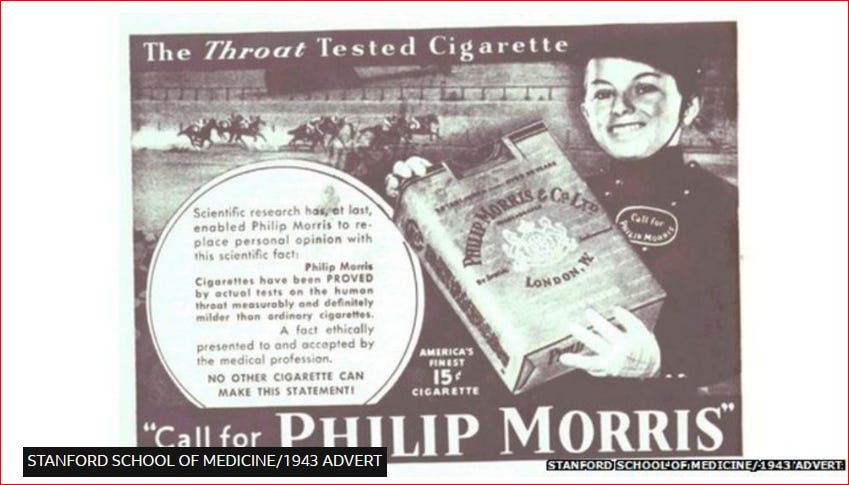
Joel M. Moskowitz, Ph.D.
Here is a suggestion for those working at the new “Center to End Corporate Harm” in San Francisco: Visit Joel M. Moskowitz, Ph.D. at Berkeley and, see his Electromagnetic Radiation Safety website a valuable resource for scientists, journalists, and the public.
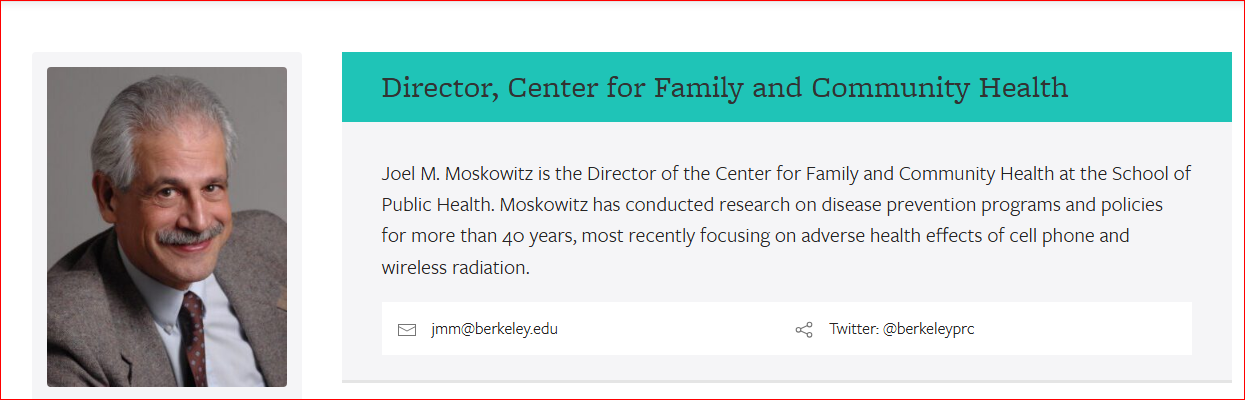
Joel Moskowitz | UC Berkeley Public Health
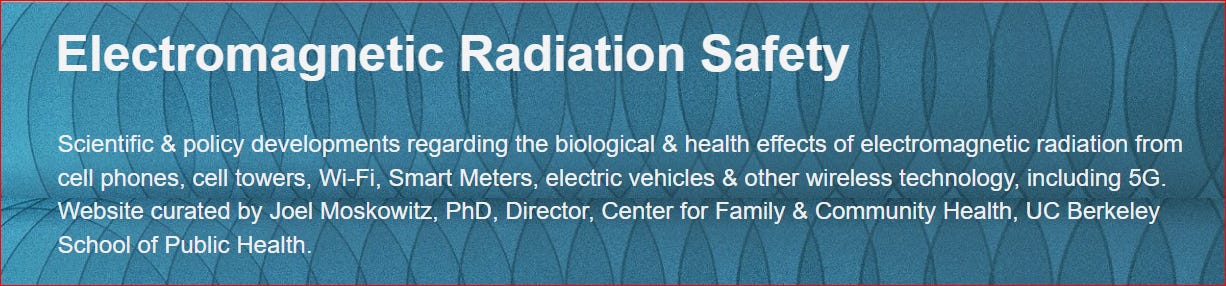
Electromagnetic Radiation Safety
A Possible Action Item for Interested Readers:
Send an email to Liza Gross at Inside Climate News, author of the article Lethal Greed: How Corporate Manipulation of Science and Regulation Makes People Sick Scientists launch a new research center to study what they say is now a leading disease risk factor: corporations thanking her for the article
Ask her to write a follow-up story about how corrupted climate science and EMF/RFR is making people sick, too.